Epigenetic Clocks are No Longer
Just for Humans
The Horvath Mammalian Array - a powerful platform for comparative biology and translational research, covering 125+ mammalian species using 37,000 evolutionarily conserved CpG sites.
What Is the Mammalian Array?
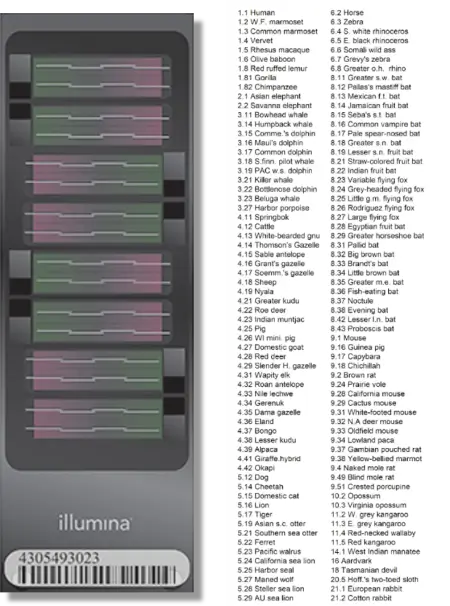
The Horvath Mammalian Methylation Array is a custom Illumina array designed to measure DNA methylation at conserved CpG sites across the mammalian genome. Because these 37,000 sites are evolutionarily conserved, the same array can measure epigenetic age in any mammal - from a mouse to a bowhead whale.
This breakthrough enables cross-species comparative aging studies, companion pet health monitoring, preclinical research with rodent and primate models, and wildlife conservation biology - all using validated epigenetic methodology.
To date, the array has been used to profile 565+ dogs, study 128 different mammalian species, and develop 10+ organ/tissue-specific clocks in mice alone.
Species Covered
Tissue Types Analyzed
- Blood
- Liver
- Kidney
- Heart
- Muscle
- Skin
- Fibroblasts
- Oocytes
- Cerebellum
- Cortex
- Hippocampus
- Hypothalamus
- Striatum
- Subventricular Zone
-
Horvath Mammalian ArrayAll mammals (preclinical & comparative)
-
Mammal320KMouse studies (320k sites)
-
Mammal40KOther organisms (40k sites)
Research Applications
Companion Animal Medicine
565+ dogs already studied. Epigenetic age monitoring in pets enables veterinary longevity medicine and intervention research for companion animals.
Preclinical Research
10+ organ/tissue-specific clocks developed in mice. The ideal platform for longevity intervention studies in rodent models before human trials.
Wildlife Conservation
Biological age assessment for marine mammals, endangered species, and wild populations. Understand how environmental stressors accelerate aging in wildlife.
Key Scientific References
-
Mammalian Methylation Consortium, 2021 - Universal DNA methylation age across mammalian tissues
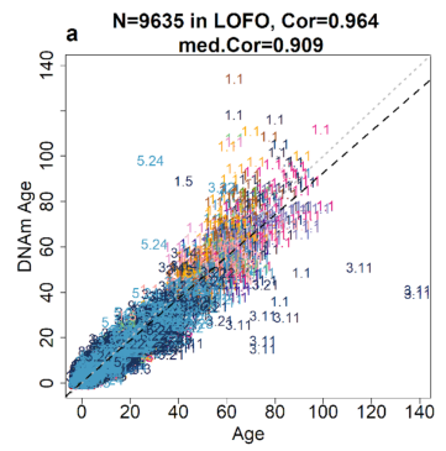
Demonstrates the power of DNA methylation to predict chronological age across 59 tissue types and 128 mammalian species, including humans, dogs (n=565), mice, killer whales, bottlenose dolphins, bowhead whales and naked mole rats.
-
Arneson et al., 2021 - A mammalian methylation array for profiling methylation levels at conserved sequences
An overview of the mammalian array technology itself. The array is expected to find applications in preclinical studies, comparative biology, conservation research, and epigenetic studies of aging and development.
-
Species-specific studies and data
New studies are released regularly, including elephants, cats, beluga whales, sheep, deer, cattle, pigs, primates, rodents and bats, with more on the way for horses and dogs.
How Clock Foundation Can Help
The Clock Foundation can assist with research and testing using the mammalian array - from sample processing and QC to statistical analysis and scientific interpretation. We work with academic labs, biotech companies, veterinary practices, and conservation organizations.
For researcher access to the array and the online portal for DNA/tissue sample submission, visit the research portal below.
Start a Mammalian Array Project
Contact us to discuss array access, sample submission, or research collaboration.