Our Mission & Massively Transformative Purpose
A UCLA spin-out and nonprofit that is speeding the availability of treatments that prolong health and life expectancy through epigenetic aging clocks and adaptive clinical trials.
Our Mission
"Enable everyone to achieve longevity escape velocity using safe and affordable interventions."
The Epigenetic Clock Development Foundation ("Clock Foundation") is a UCLA spin-out and nonprofit that is speeding the availability of treatments that prolong health and life expectancy. We are focused especially on the use of epigenetic aging clocks and adaptive clinical trials.
We identify and develop the key enabling technologies that are critical to this mission, identify promising teams able to use them, and make them available to our partners - researchers, physicians and clinics, contract research organizations, and drug development companies.
Core Focus Areas
- Epigenetic aging clocks as biological age indicators
- Development of powerful biomarkers for healthspan/lifespan prediction
- Clinical trial infrastructure (U.S. and international)
- Reduction of epigenetic testing costs
- Mechanistic studies and increasingly sophisticated biomarkers
Why Us? Why Now?
Findings from the lab of Dr. Steve Horvath over the past ten years are ushering in a revolution in aging research. This work was enabled by highly collaborative sharing of data from hundreds of clinical studies and tens of thousands of patients - an unprecedented degree of sharing and digital data availability that would not have been possible fifteen years ago.
In 2019, our team demonstrated for the first time that human epigenetic aging could be reversed using a combination of repurposed FDA-approved drugs. That landmark study highlighted the need for nonprofit infrastructure that rigorously evaluates and develops promising anti-aging treatments.
We believe that despite intense public interest and early-stage venture investment in longevity medicine, the absence of clear regulatory guidance and incentives is impeding its proper development. If we do not address these challenges, decades will pass without the development and validation of highly effective, affordable and safe forms of preventive medicine that target the biology of aging.
Impact & Our Massively Transformative Purpose
Our mission is to enable everyone to achieve longevity escape velocity using safe and affordable interventions. We aim to do this by making epigenetic aging clock technology much more widely available, and by ensuring its rigorous use in both clinical and preclinical studies.
We are guided in part by the same approach the FDA takes, helping ensure that new treatments are both safe and effective - while also helping to craft and establish a regulatory approach to approving preventive medicine, through regulatory development work on epigenetic aging clocks.
Our foundation focuses on continuing to achieve unprecedented clinical and preclinical trial results. We also take a longer-term, deeper and broader approach: acquiring a thorough understanding of the fundamental biology and mechanisms of aging, especially through the powerful new "lens" of epigenetic aging and epigenetic aging clocks. We consider this an essential element - the foundation upon which our goals are based.
The TRIIM trial demonstrated epigenetic aging reversal in healthy men aged 50–65 using repurposed FDA-approved drugs - a landmark moment for the entire field.
Leadership Team
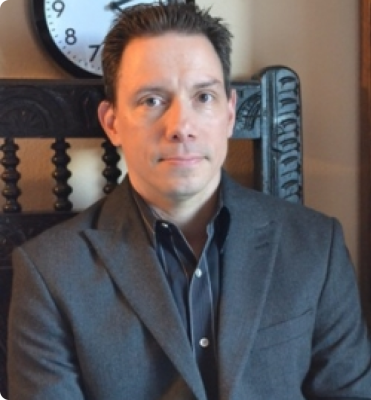
Dr. Steve Horvath, PhD, ScD
Dr. Horvath uses mathematics to study DNA's relationship to environment, lifestyle, aging, and anti-aging treatments. He developed the pan-tissue "Horvath clock" - the first to measure age across all human tissues - as well as PhenoAge and GrimAge, which are now among the most widely used biomarkers in longevity science.

Robert T. (Bobby) Brooke
Bobby holds a B.S. in Electrical and Biomedical Engineering from Georgia Tech and an M.S. in Biomedical Engineering from UCLA. He is also CEO & CTO at Intervene Immune, focused on thymus regeneration as a longevity intervention.

Juozas Gordevicius, PhD
Dr. Gordevicius specializes in epigenetic data analysis and methylation array bioinformatics. His work in the Horvath Lab at UCLA directly informs the analysis pipelines used by Clock Foundation studies today.
Scientific Advisory Board

University of Edinburgh. Expertise in genetic and epigenetic determinants of cognitive aging.

Asst. Prof. University of Hawaiʻi; Adj. Asst. Prof. Epidemiology, UCLA.

Group Leader, Cellular Biology at Public Health England.
Computational Biologist at EPA; affiliated with Duke and UNC Chapel Hill.

CSO at 21st Century Medicine & Intervene Immune. TRIIM trial co-investigator.
Support Longevity Research
Clock Foundation is a 501(c)(3) nonprofit. Your donation directly funds epigenetic research that advances healthspan for everyone.
Donate & Support our Longevity Research